
Rebuilding for luxury: replacing a low-code stack for 91/100 performance and zero layout shifts

World Class
Client
stayworldclass.com
Industry
Hospitality
Country
United States

When your business model is built around business executives and luxury travelers booking premium properties, digital friction is a dealbreaker. World Class® operates in a market segment where every property must pass exhaustive quality standards and protocols to ensure a unique service.

Yet, as their inventory expanded across cities and their operational needs matured, their initial MVP stack — Webflow for the frontend and Xano for the backend — hit a performance and architectural ceiling.

To deliver a booking experience that felt as seamless and exclusive as the physical stays they offer, World Class® partnered with our team to execute a complete, 100% full-code migration to Next.js, Supabase (PostgreSQL), and NestJS.
The challenge: growing beyond the MVP

Low-code platforms like Webflow and Xano are powerful launchpads. For World Class®, they successfully validated the business model and allowed rapid early iterations. However, as the platform scaled, two structural challenges emerged:

  1. Frontend latency and visual instability.High-resolution luxury property photos slowed down initial page loads, with largest contentful paint (LCP) averaging 4.22 seconds and layout shifts (CLS) displacing interface elements while users browsed.
  2. Complex relational data and booking logic. In Xano, critical data — such as cities, buildings, and property details — was often nested or repeated rather than existing as clean, independent entities. As booking volume grew, checking multi-calendar availability across overlapping dates required a rigid, transaction-safe backend to prevent race conditions and double bookings.

The process: discovery, prototyping, and transparent delivery

Migrating a live booking engine and an internal CMS is not a simple copy-paste operation. We structured our engagement around engineering predictability, clear data modeling, and continuous communication:

  • Discovery and architecture mapping. Before writing any piece of code, we made an inventory of every entity in the client's Xano database. We designed a controlled 4-stage ETL (extract, transform, load, verify) pipeline that mapped legacy IDs to new PostgreSQL UUIDs, preserving historical relationships across properties, buildings, cities, and bookings.
  • No-black-box communication. We maintained continuous alignment through weekly synchronous reviews and structured asynchronous updates. By delivering features in verifiable milestones, stakeholders could inspect the progress of both the public booking site and the internal administrative CMS independently.
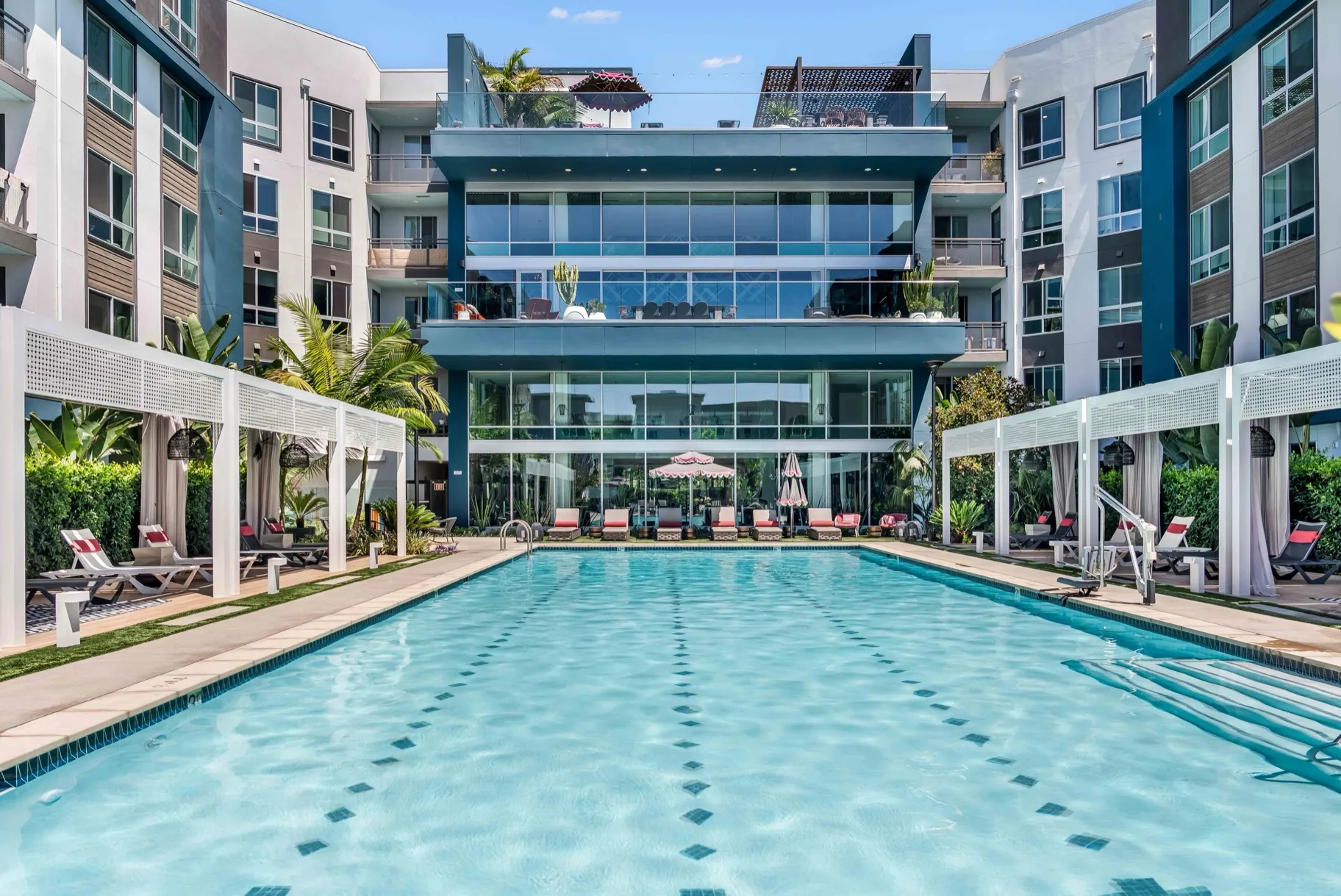
The pool courtyard of a World Class property, now served by the new platform

The solution: a decoupled, high-performance enterprise stack

We rebuilt World Class® into a decoupled, three-tier architecture designed for speed, security, and independent deployment:

  1. Frontend layer

    Public website + internal CMS, both Next.js

    SSR/SSG with edge caching and native image optimization on the public site; shadcn/ui, Radix UI, and React Hook Form + Zod in the CMS.

  2. Business API layer

    NestJS central API

    Authed operations, business logic, and rate limiting.

  3. Data & storage

    Supabase (PostgreSQL) + Supabase Storage

    Single source of truth for availability and inventory.

1. The public booking engine (Next.js)

  • Intelligent image pipeline. Premium property photos are optimized at two stages. When uploaded via the CMS, they are standardized to a maximum of 2560px at ~85% JPEG compression. On the public site, Next.js delivers device-responsive WebP/AVIF formats, preloading critical hero images and lazy-loading off-screen galleries.
  • Single source of truth for bookings. Instead of fragmented availability scripts, PostgreSQL queries evaluate occupied date ranges directly against confirmed reservations and synchronized calendar blocks. Database-level transaction guarantees protect against overlapping booking requests.

2. The bespoke operational CMS (Next.js + Tailwind + shadcn/ui)

  • Rather than relying on rigid, pre-built UI suites, we built a custom CMS using React, Tailwind CSS, and shadcn/ui, giving the team complete control over components and business logic.
  • Administrative operations — creating cities, managing deduplicated buildings, reordering photos via DnD Kit — communicate securely with a central NestJS API, ensuring the CMS never exposes privileged credentials to the public browser.
"The transformation is no longer explained by the technology chosen; it is demonstrated by the experience every visitor receives."

World Class Performance Report

Previous Webflow site vs production, August 2026

The impact: a 4× faster presentation of content

Following the migration, we audited production performance across four core user journeys — home, catalog, property detail, and the Irvine destination page — using standardized desktop Lighthouse evaluations.

MetricPrevious Webflow siteCurrent production (Next.js)Net improvement
Average Lighthouse score55 / 10091 / 100+36 points (+65%)
Largest contentful paint (LCP)4.22 s0.97 s77% faster (>4× improvement)
First contentful paint (FCP)2.00 s0.45 s78% faster
Cumulative layout shift (CLS)Up to 0.3480.000100% layout shift elimination

Key route-by-route wins

  • Property detail page (47 → 95 score). The most critical page for booking decisions saw LCP drop from 4.89 s to 1.07 s, allowing potential guests to inspect high-resolution luxury photos instantly.
  • Catalog and browsing (CLS 0.348 → 0). Property cards no longer jump or rearrange while loading, eliminating misclicks during catalog exploration.
  • Real-user field data. Passing Core Web Vitals over a 28-day production window confirm a stable field experience (0.8 s LCP, 83 ms INP, 0.09 CLS).
Average production Lighthouse score, up from 55.
91/100
Faster largest contentful paint: 0.97 s, down from 4.22 s.
77%
Cumulative layout shift on every audited route.
0
Points gained on the property page, from 47 to 95.
+48

Key takeaway: architecture as a brand asset

For luxury brands, speed and reliability are brand differentiators. By evolving from a low-code MVP to a customized Next.js, NestJS, and Supabase ecosystem, World Class® eliminated platform lock-in, empowered their operations team with a purpose-built CMS, and delivered a digital booking experience that loads four times faster.

Recognizing when an application has outgrown its initial launchpad is a critical inflection point for any growing product. For technical leaders and founders exploring whether their current low-code stack is approaching its scalability limits, the engineering team at Produlis offers informal architecture reviews and practical roadmaps for transitioning to a custom, full-code foundation without disrupting live operations.

We're ready to answer your questions

Book a call and we'll walk you through how we'd approach your platform.